Orchard House
Private Residence | New Build | 39.6302° S, 176.8304° E
The Orchard House sits within a greenfield site in Hawke’s Bay, surrounded by orchards and shaped by two prominent outlooks across the wider landscape. Views toward Te Mata Peak and Mt Erin establish a strong sense of orientation, grounding the home within its rural setting while offering a daily connection to the contours and landforms that define the region.
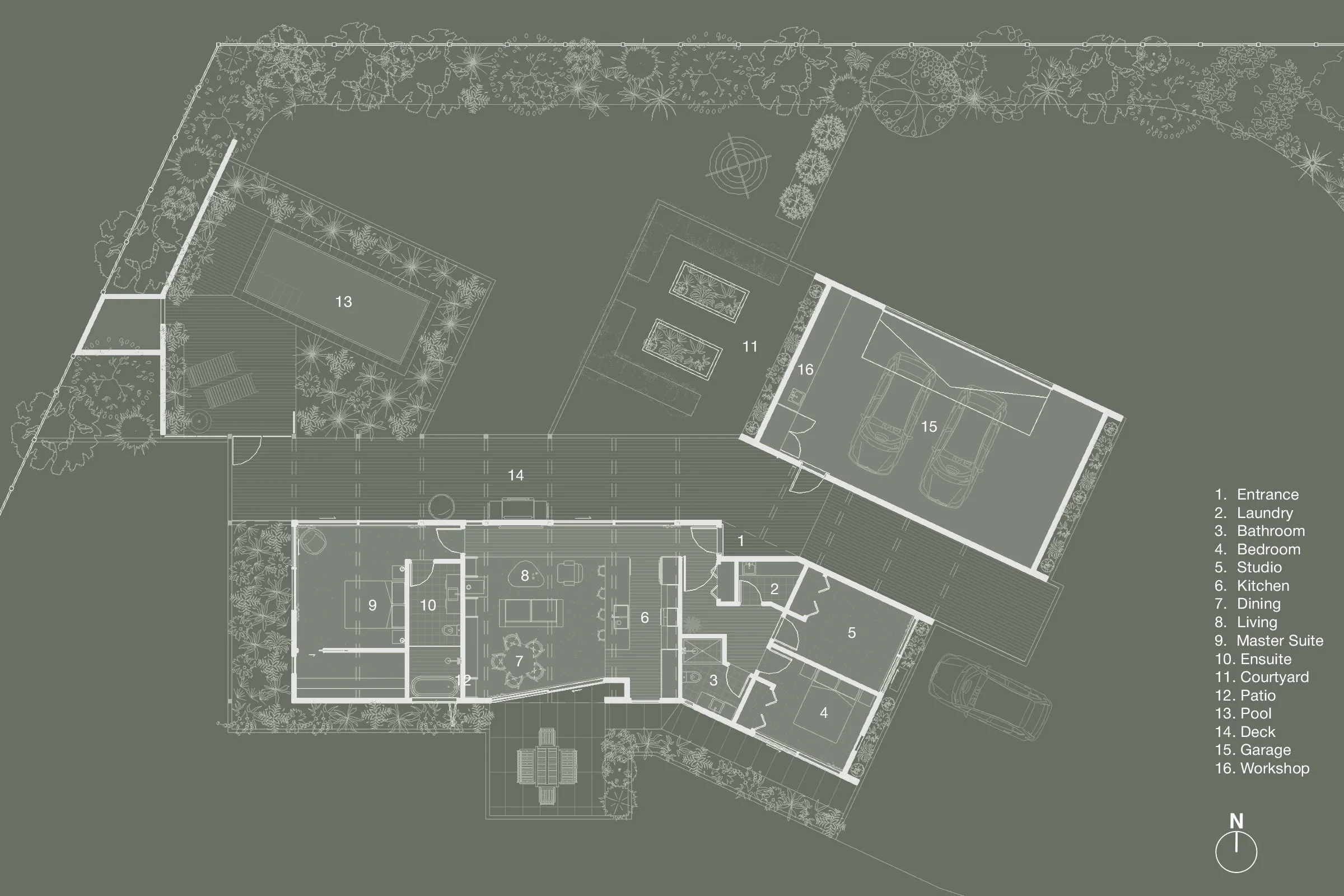
The brief called for an efficient home for a semi-retired couple, balancing everyday comfort with spaces tailored to individual passions and routines. Requirements included a substantial garage and workshop for motorsport interests, open plan living connected to the garden and pool, three bedrooms, and spaces that could flex between guest accommodation and a home-based beauty therapy studio. Orientation, outlook, and the ability to occupy the house efficiently as patterns of use change were central to the clients’ vision.
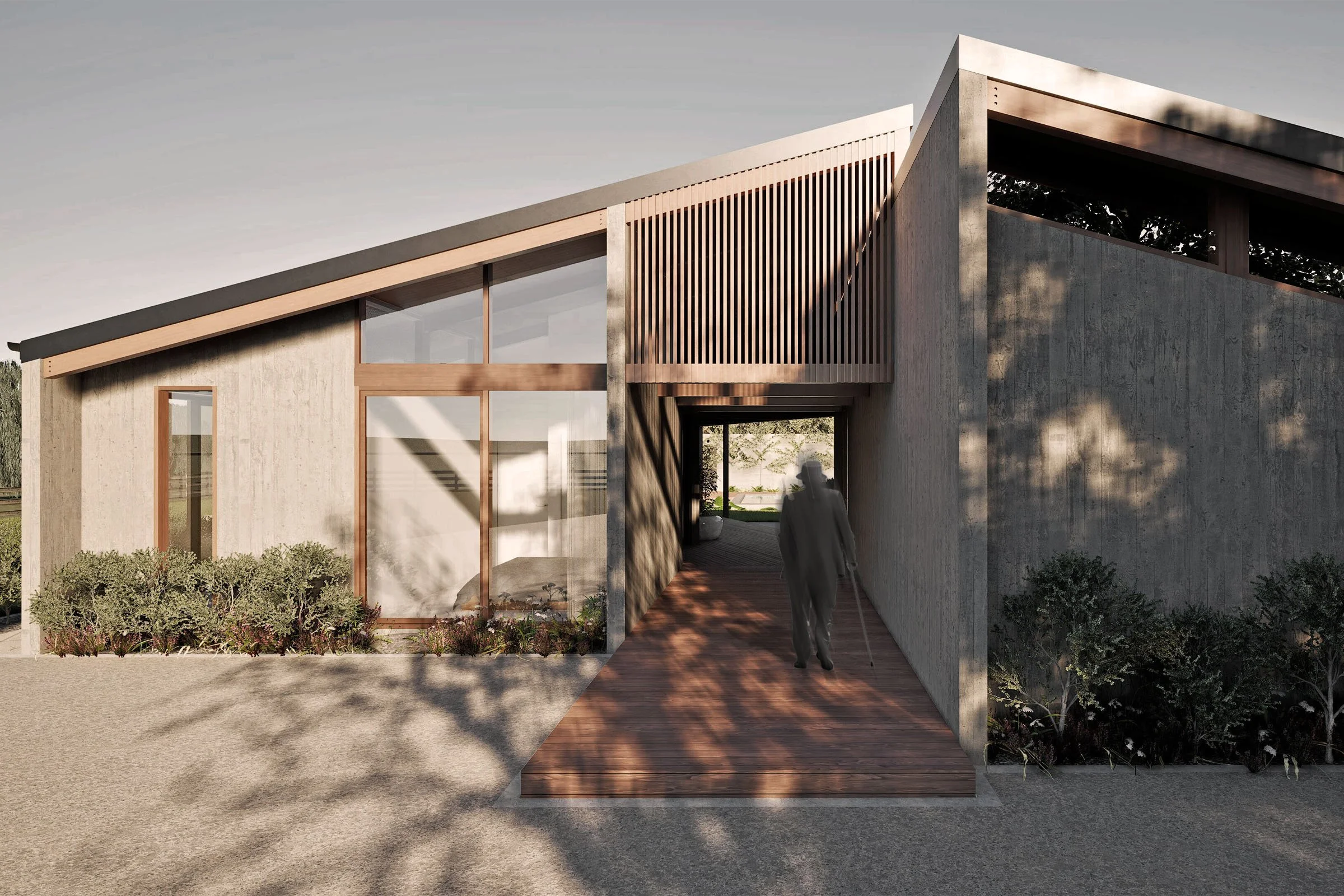
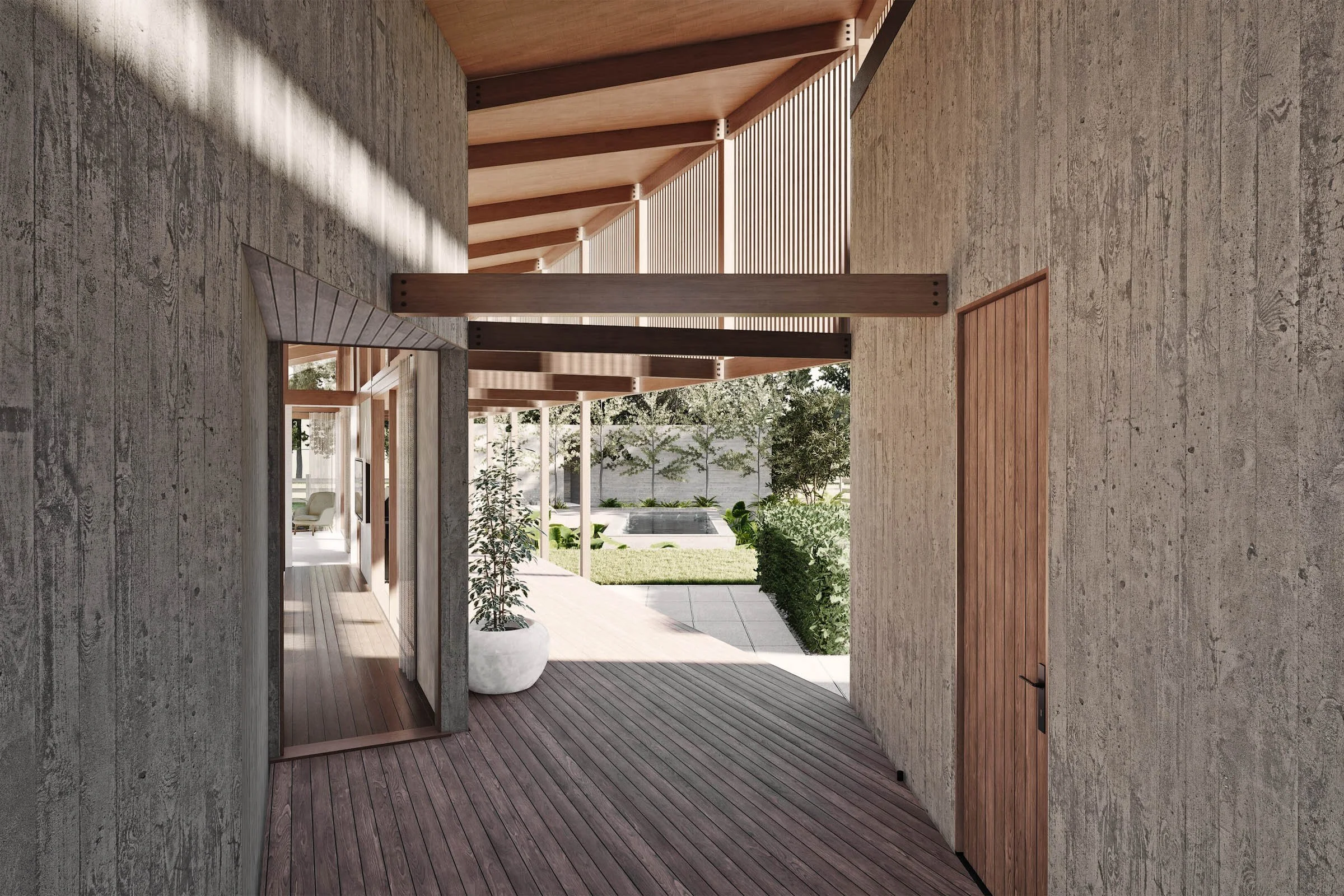
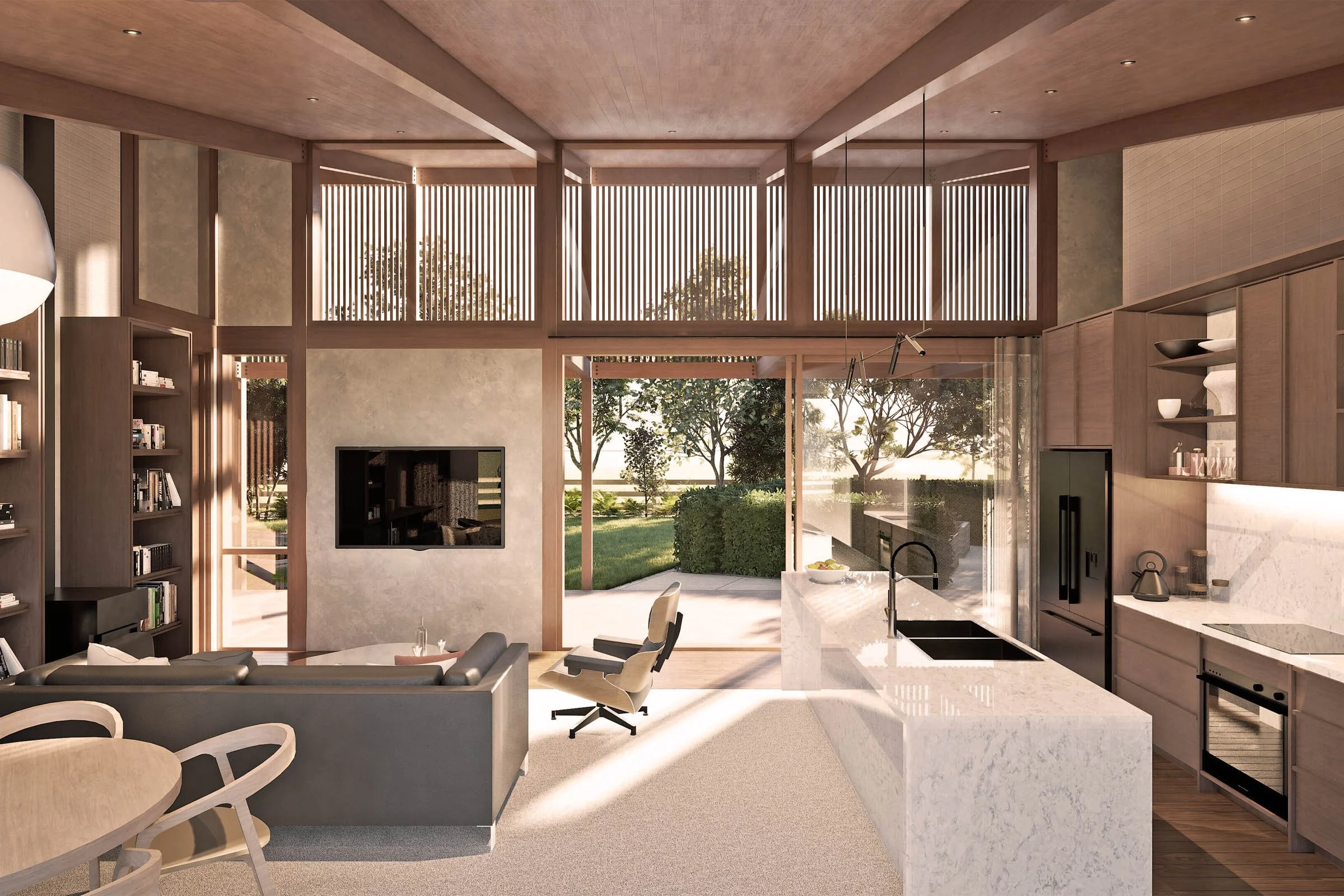
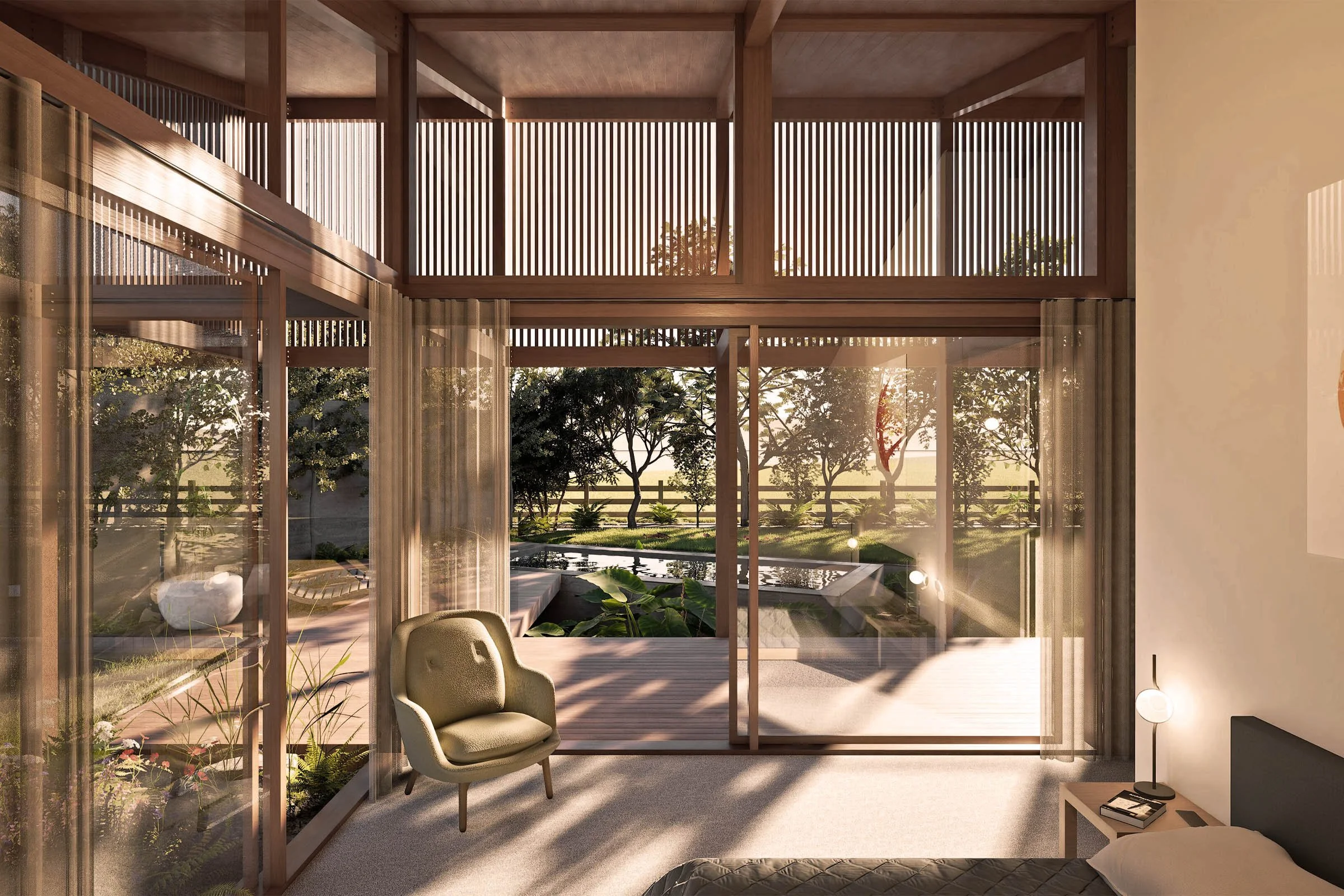
The plan responds directly to site, outlook, and programme. The approach is framed with the swimming pool held as a visual backdrop, while departure aligns toward Te Mata Peak. At the point of entry, the house pivots in plan, opening internal views toward Mt Erin and reshaping the relationship between indoor and outdoor spaces. Inside, the home balances openness with intimacy. The master suite is positioned at one end to look quietly across the garden and pool, and flexible guest and work-from-home spaces at the other. The open plan kitchen, dining, and living spaces form a light-filled centre for daily life. Angled ceilings and carefully framed views extend the sense of space, creating rooms that feel generous without excess. This clear public–private delineation allows the house to adapt easily to daily, seasonal, and long-term patterns of occupation.
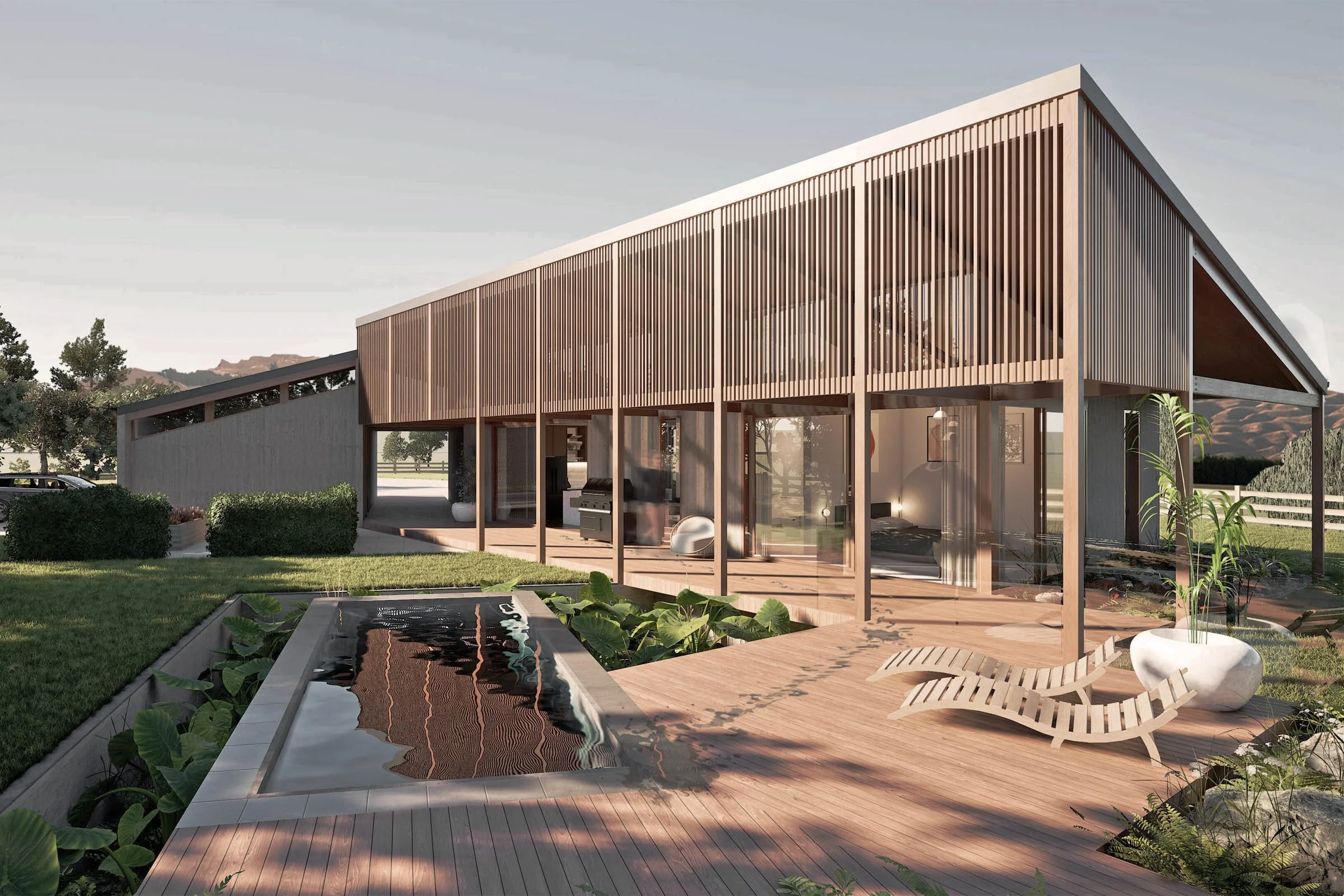
Inspired by the contours of Te Mata Peak, the roof form becomes an architectural interpretation of the surrounding landscape. One plane rises with the gradual slope above Havelock North, a vertical break echoes the cliffs, and a softer return reflects the land as it settles back into the Tuki Tuki valley. This sectional logic informs both elevation and plan, establishing a consistent framework that guides form, proportion, and spatial organisation throughout the house.
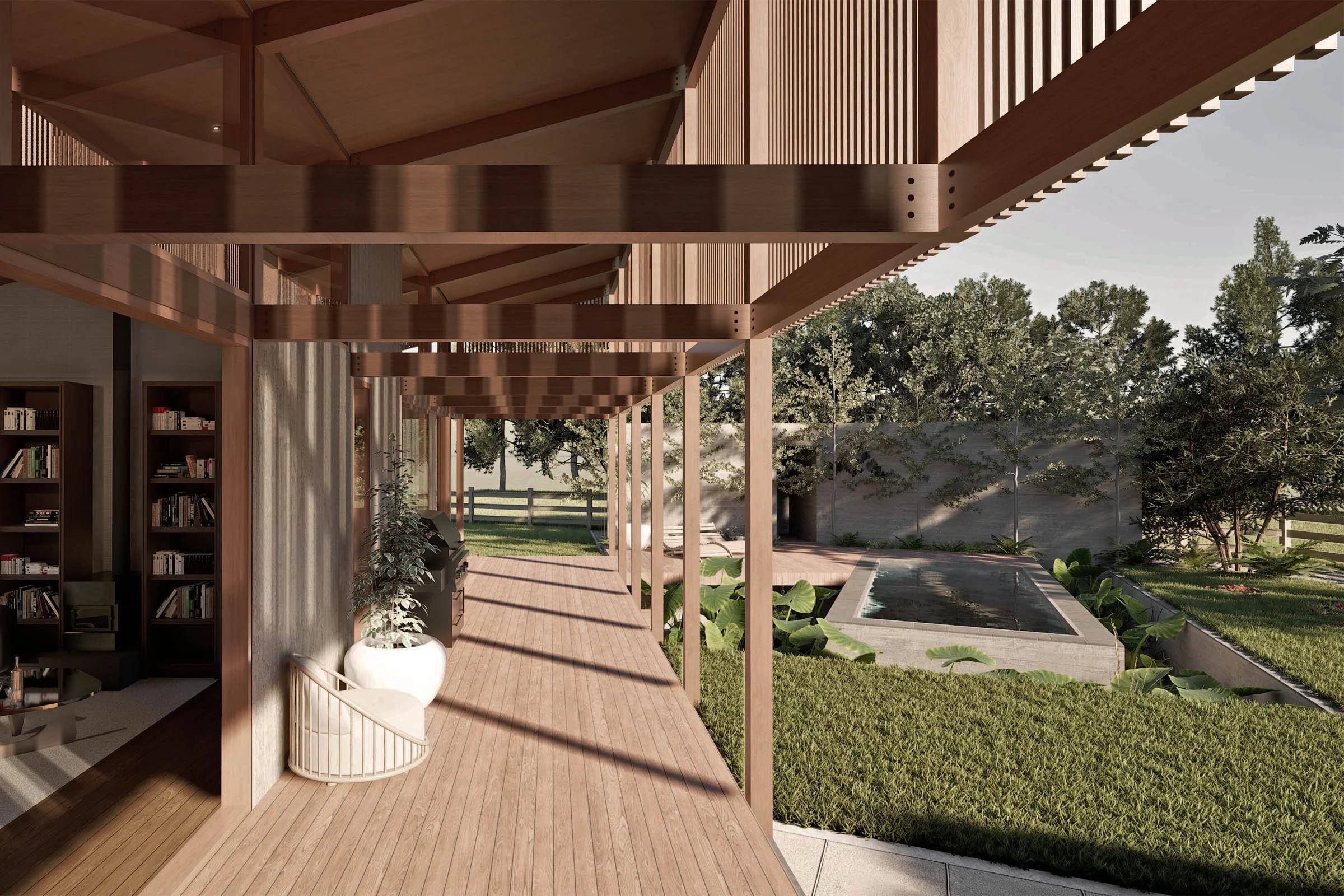
Materiality plays a central role in grounding the architecture. The home is constructed from insulated precast concrete panels, chosen for durability, thermal performance, and longevity. A timber-screened verandah wraps the building, mediating light, scale, and climate while softening the concrete mass. This use of timber extends inside, where exposed beams support the roof structure and bring warmth and tactility to the interior. The expressed timber structure references the clients’ existing home, carrying a familiar material language forward into a new setting and reinforcing the continuity between past and future.
Outdoor spaces are shaped as places of occupation rather than edges. The verandah mediates between inside and out, filtering light and providing shelter while framing long views back toward Te Mata Peak. From the pool, garden, and living spaces, architecture and landscape remain in constant dialogue, reinforcing the home’s connection to its setting.
Orchard House is a measured response to site, brief, and landscape. Through alignment, restraint, and careful attention to form, it transforms a familiar rural typology into a highly personal home that reflects both the character of its place and the lives it is designed to support.