Lowry Bay House
Private Residence | Alteration | 41.2924° S, 174.7787° E
Nestled into the bush-clad hillside at the base of the Eastern Bays, this three-storey family home looks out across Wellington Harbour, with views stretching from Somes Island to the distant Kaikōura ranges. Designed in the 1970s through a close collaboration between a prominent New Zealand architect and an engineer he had worked with on many projects, the house was intended as the engineer’s own family home. It is a one-off: rich in character, layered in detail, and grounded by a deeply personal design story.
Now owned by just the second family since it was built, the house has been passed from its original owners to a family of four with a deep appreciation for its architectural character. Together with the clients and the wider project team, we are approaching this project with care and respect, recognising that any alterations need to preserve the integrity of the original architecture. The brief called for a sensitive update: one that carefully reconfigures both public and private spaces, strengthening the connection between shared areas while allowing for privacy and retreat. The design enables multigenerational living through internal reorganisation, while an extension accommodates more contemporary patterns of family life. The alterations respond to both site and structure, preserving and extending the carefully framed views and use of natural light that give the home its intimate connection to the surrounding bush and harbour.
The architecture is anchored by its terraced form, structural rhythm and expressive materiality: concrete double-tee floor beams (originally repurposed from a bridge in Ōtaki), exposed Oregon rafters, and distinctive prickle roof detailing. While the original brick and blockwork will be retained, the deteriorating cedar cladding, standing seam roofing, and original single-glazed joinery are due for replacement. This presents an opportunity not only to address maintenance concerns but also to carry out a comprehensive thermal upgrade, significantly improving the home’s energy efficiency, comfort, and long-term resilience.
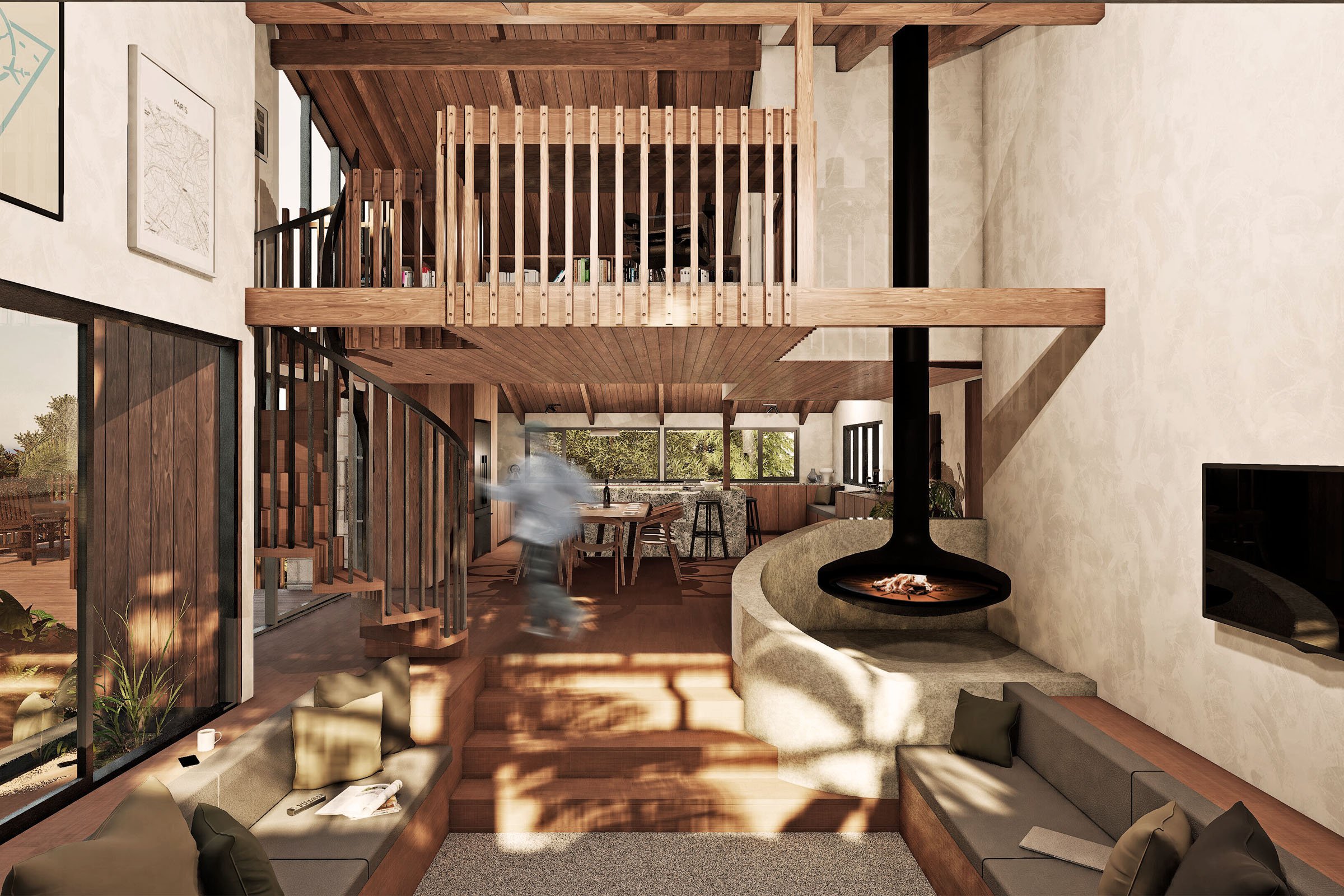
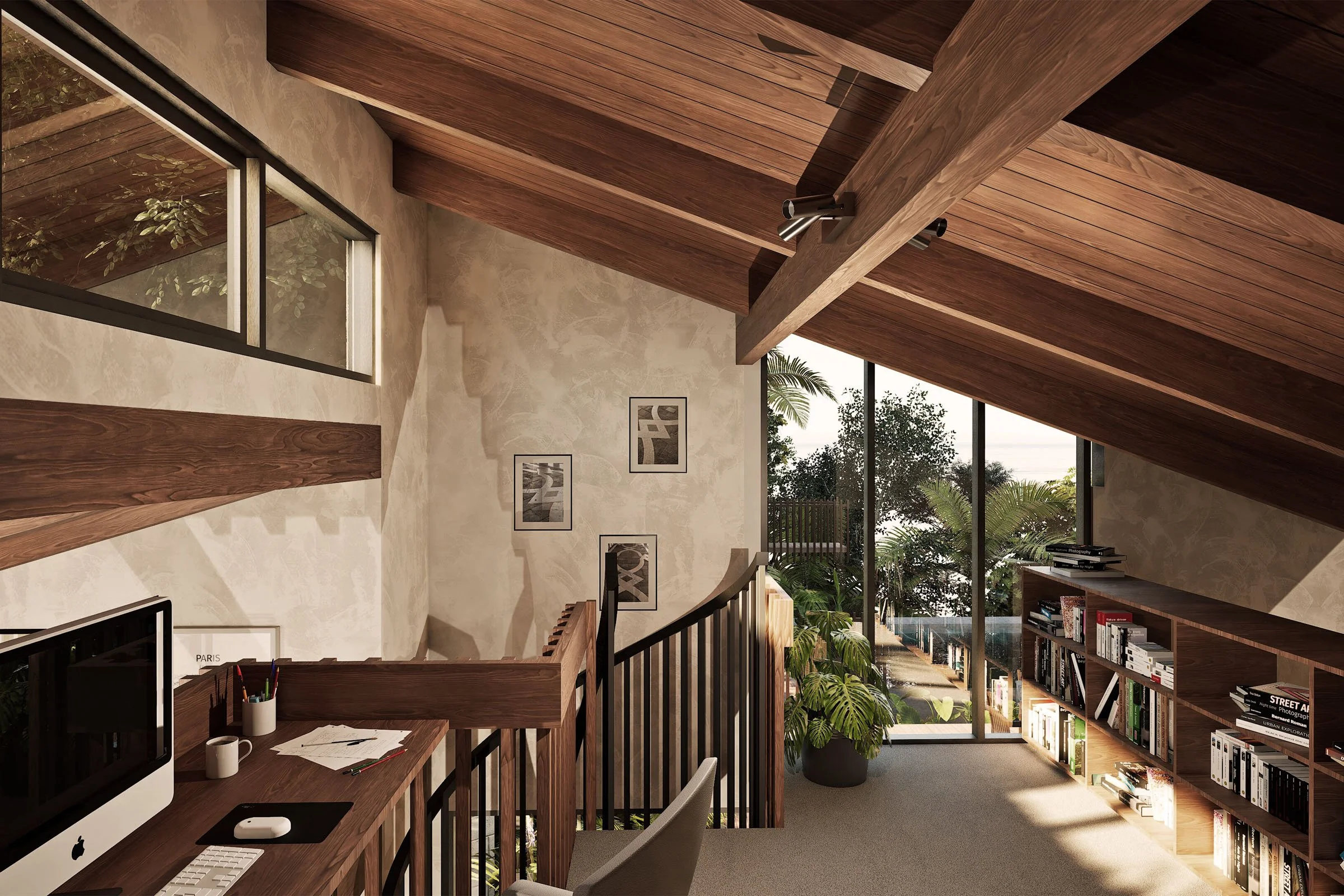
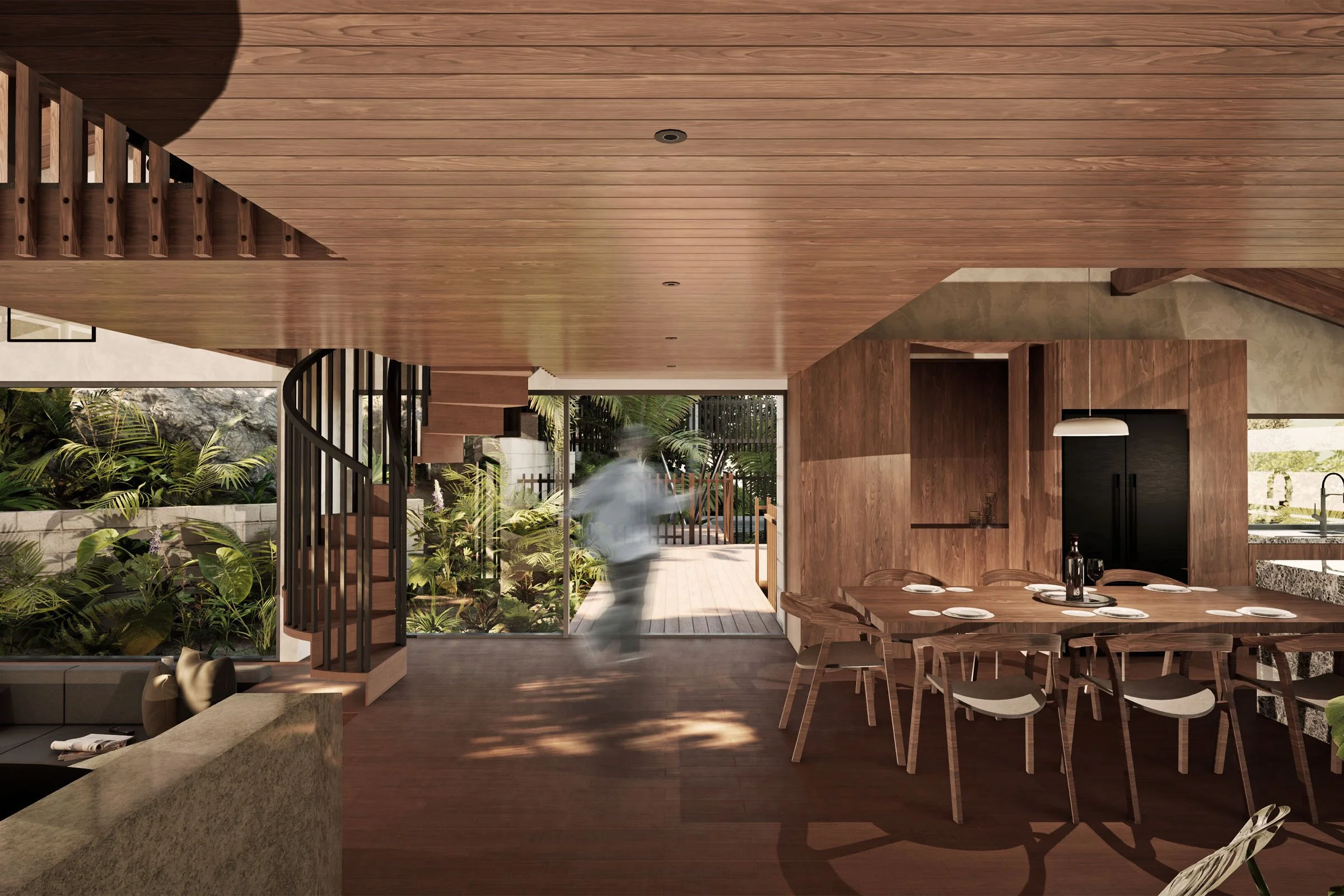
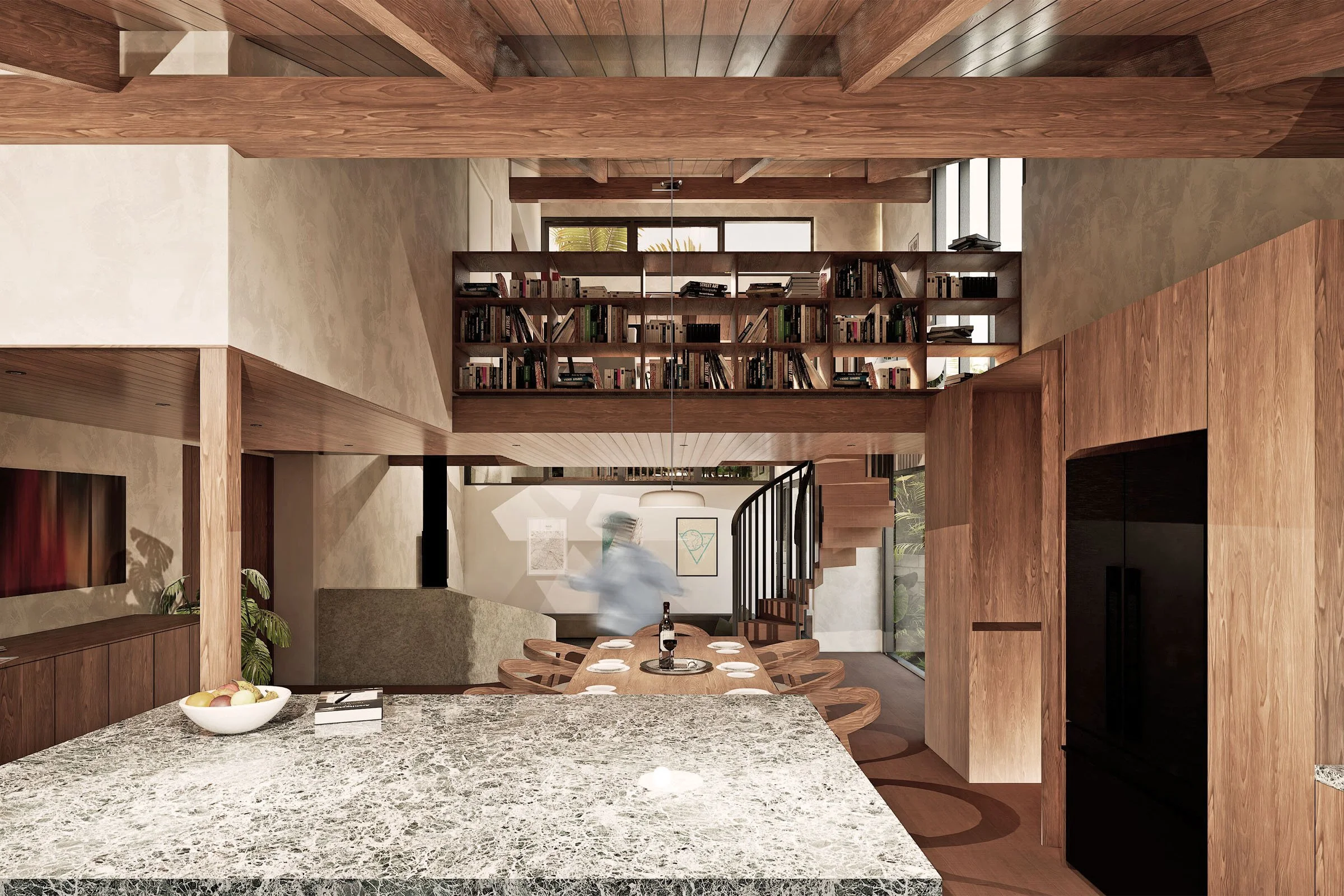
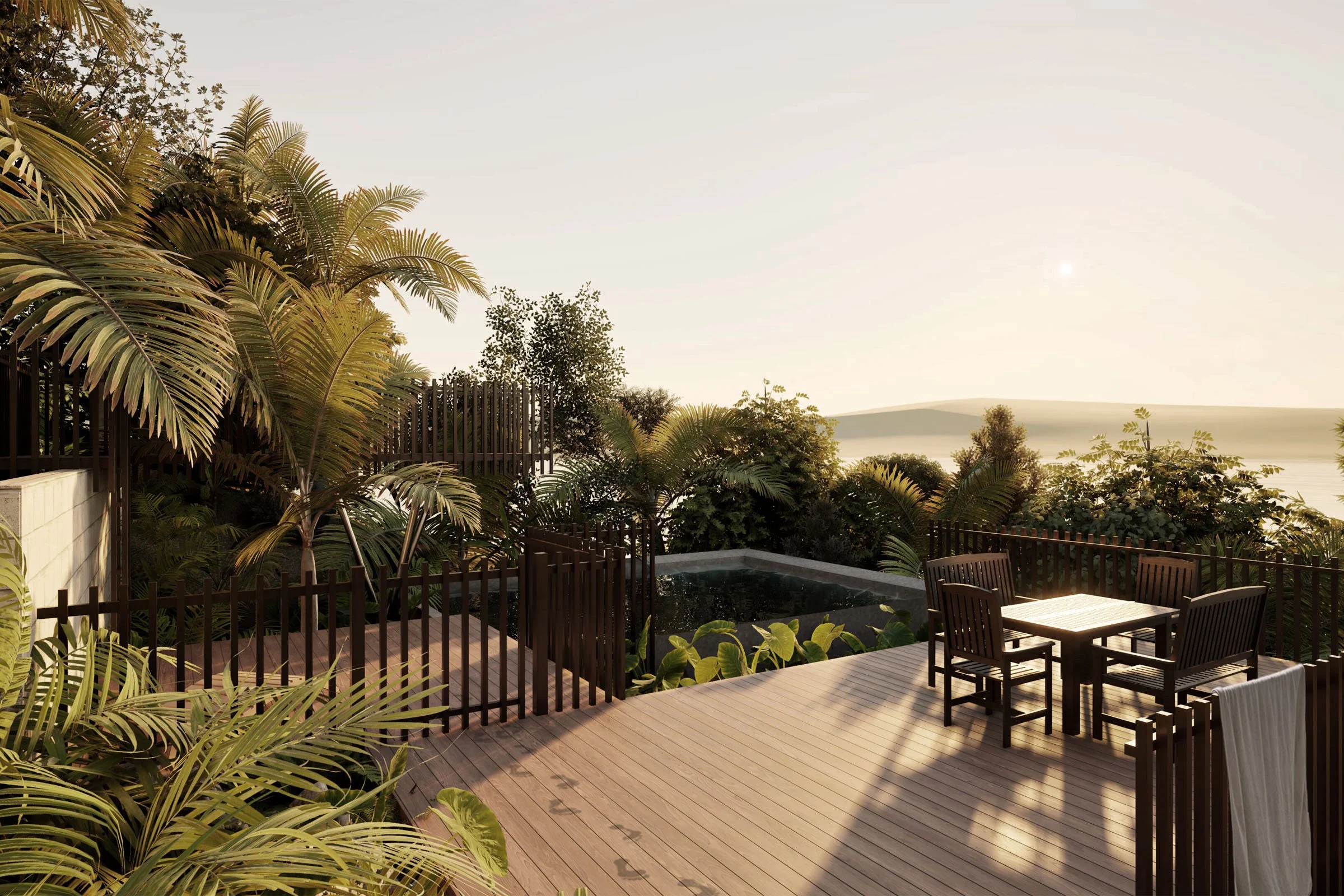
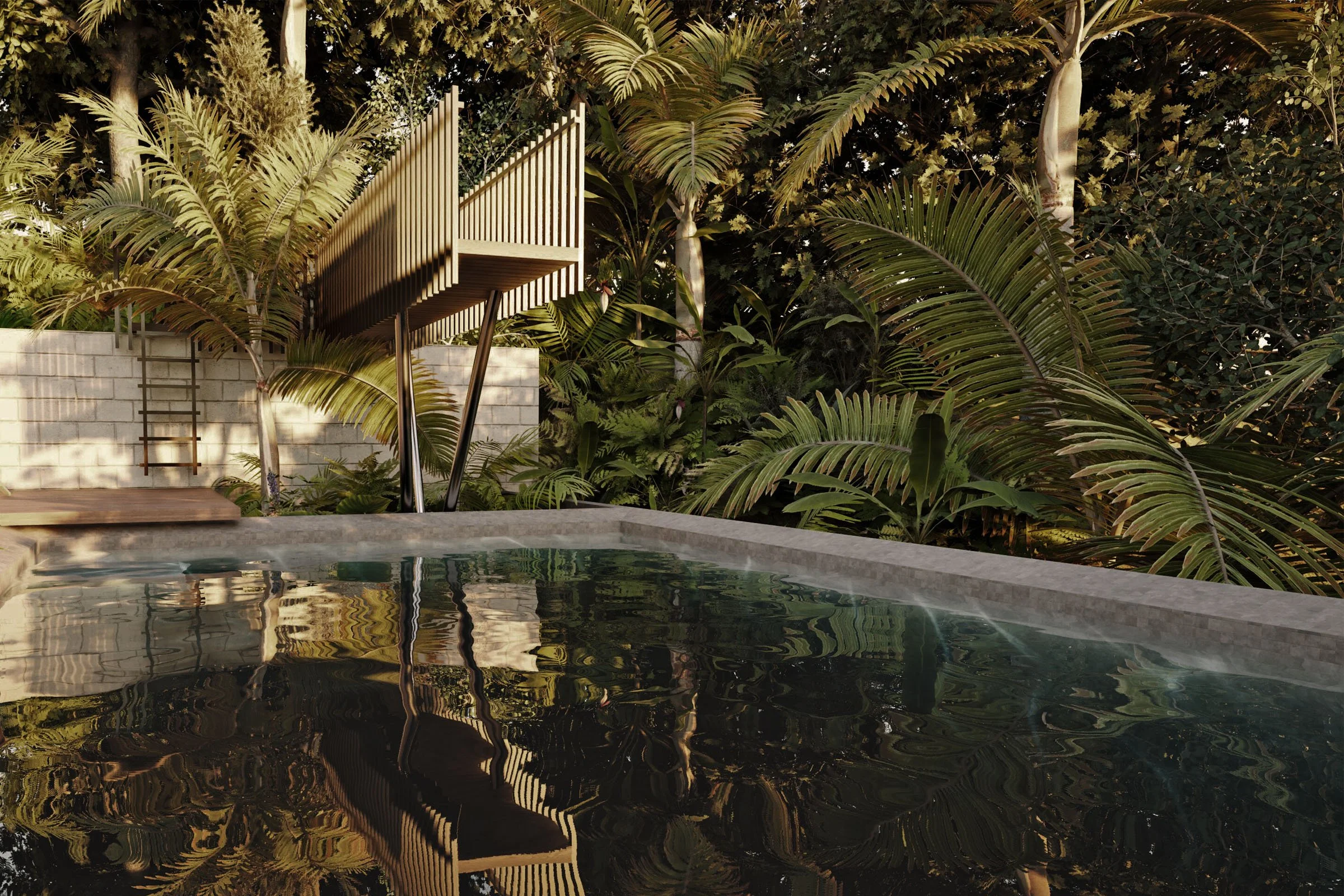
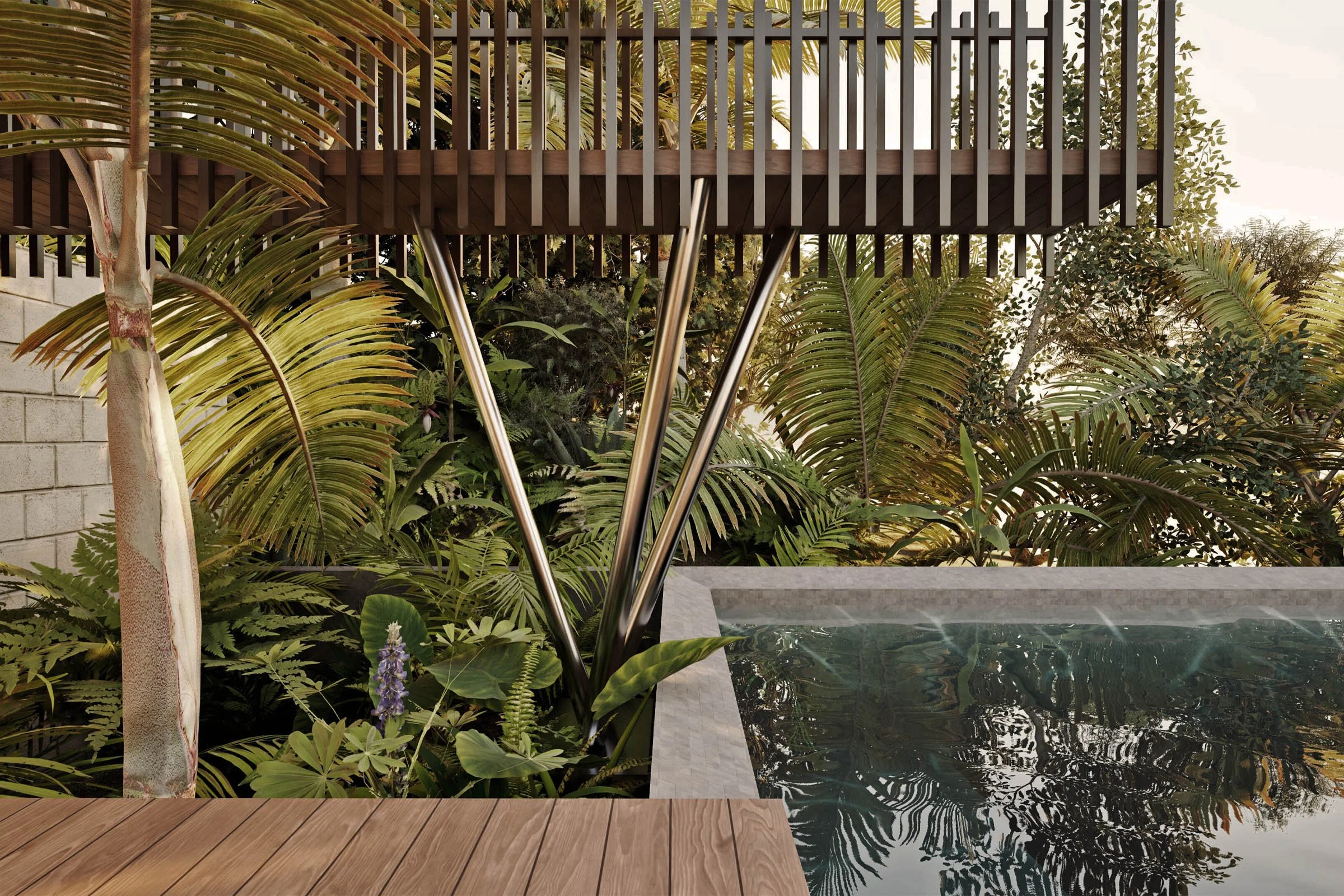
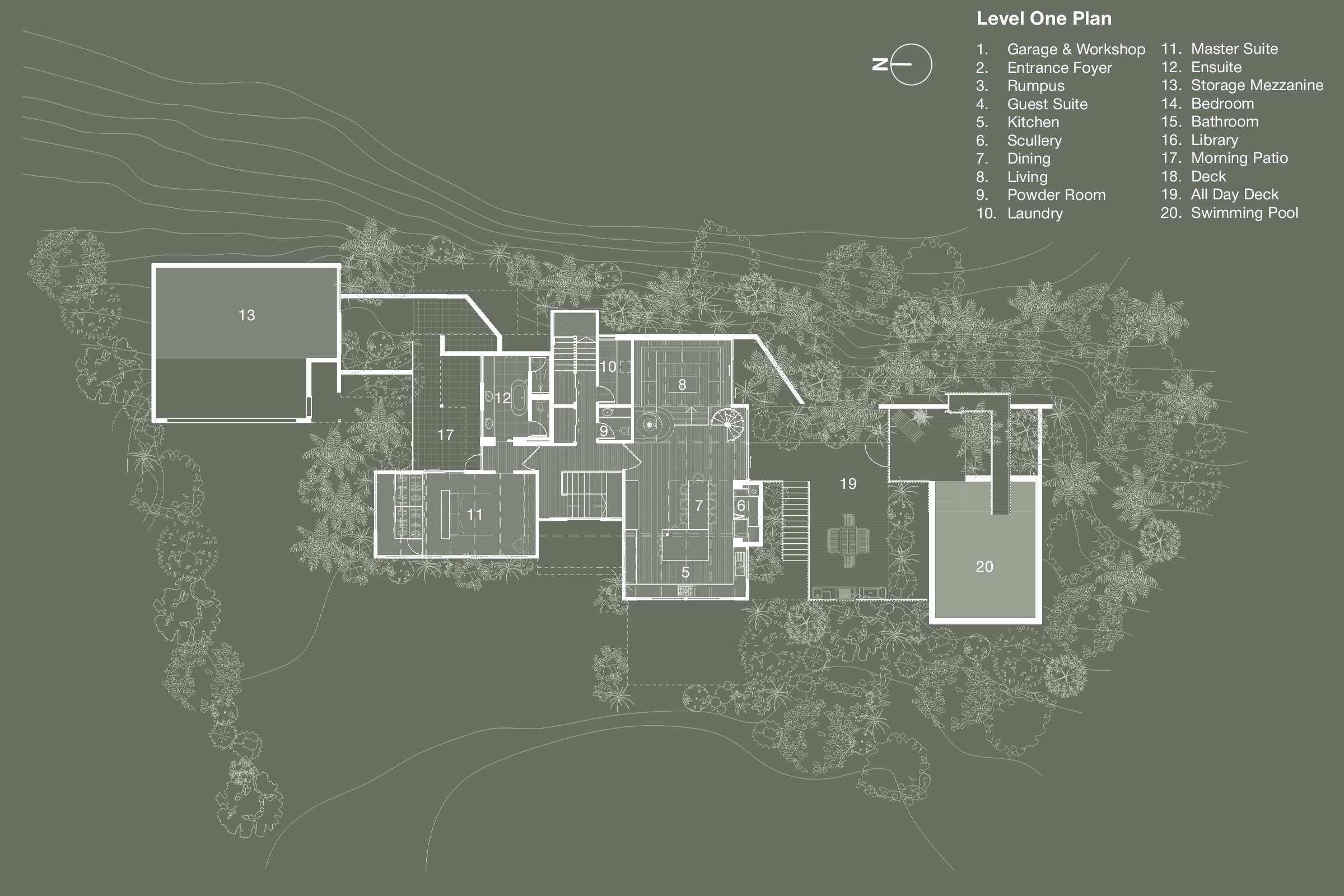
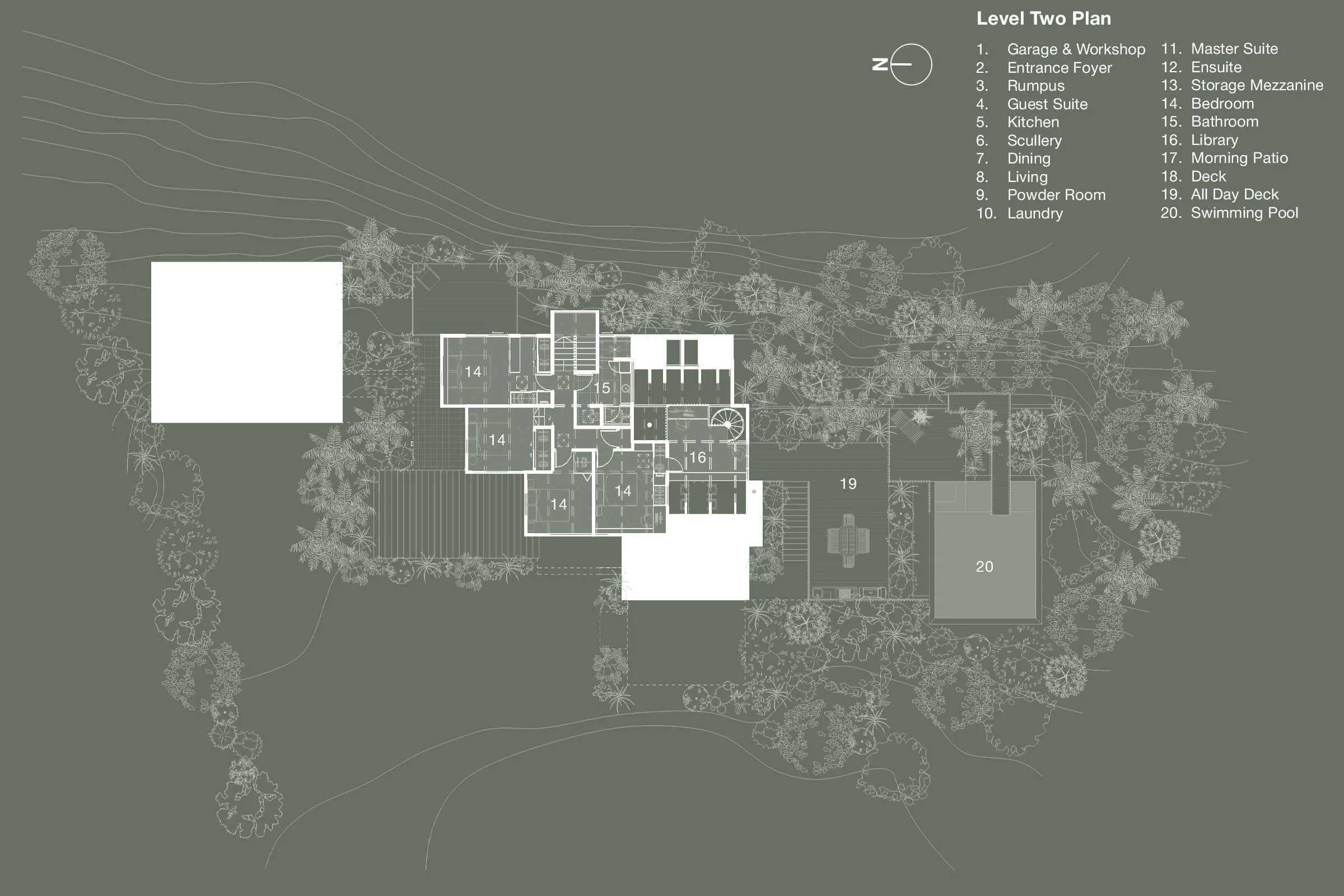
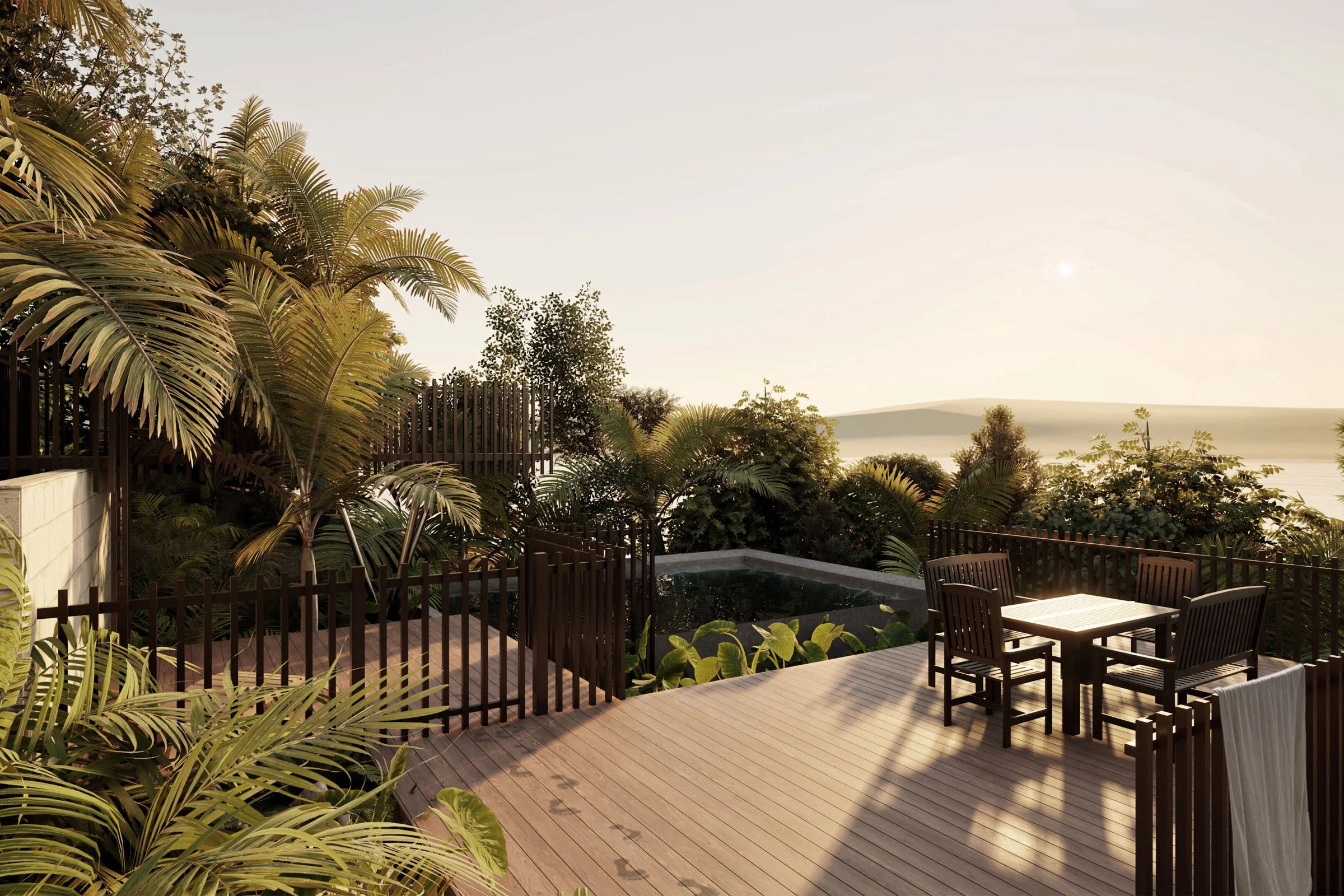
Positioned to capture sweeping harbour views and bathed in late-afternoon sun, the new swimming pool and adjacent deck extend the home’s living wing into the landscape, creating a setting for outdoor living and entertaining. A distinctive Manu Platform is nestled within the surrounding native bush, offering the experience of leaping into the pool as though from the tree canopy, a playful echo of childhood summers spent jumping from branches into rivers. Inside, the living room has been extended to include a sunken lounge, while the relocated kitchen and dining area establish a modern, open-plan arrangement. Above, the mezzanine library has been expanded to create a more functional retreat, complete with a new sculptural spiral stair. In the children’s bedrooms, playful details invite exploration: mezzanine reading nooks with concealed wardrobe entries, and a hidden “Narnia” door providing a secret passage between one bedroom and the library.
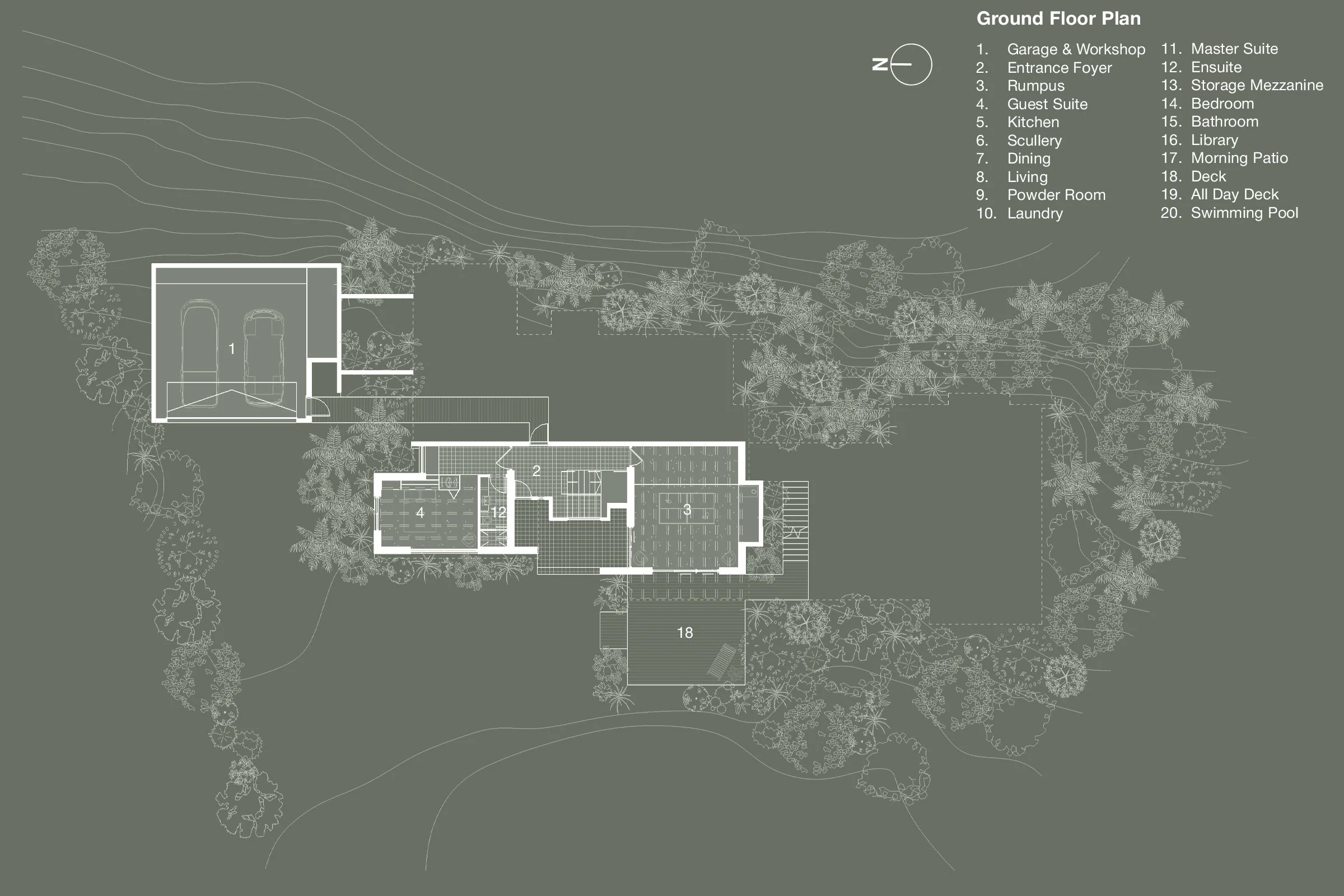
The master bedroom has been relocated to the lower level, occupying the former kitchen, dining, and laundry spaces. In contrast to the modest original layout, which offered no dedicated master suite, the new configuration provides a spacious, light-filled space with a walk-in wardrobe, ensuite, and private deck, delivering comfort and privacy within the reconfigured plan. Its design exemplifies a key ambition of the project: to achieve a significant improvement in amenity and functionality while working predominantly within the existing building envelope.
The project achieves a sensitive balance between preservation and renewal, enhancing the home’s livability without compromising its distinctive character or connection to the surrounding environment. By respecting the original architecture and embracing modern living requirements, the design breathes new life into a cherished family home, ensuring its legacy endures for generations to come.